
Plant Industry - Trapping Yellow-Legged Hornet
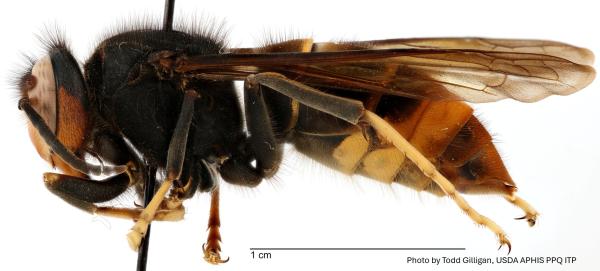
Trapping for the yellow-legged hornet can be done with just a few household materials and a simple bait mixture. Although yellow-legged hornets may be present throughout the year in some areas, they are most active between March and October, and traps are most effective in collecting hornets in summer. This trap will catch several different kinds of wasps and hornets, but honey bees aren’t usually attracted to the trap.
Instructions on trapping and monitoring are listed below or can be downloaded using this link. You can also see videos on how to make and monitor a trap at the links below.
| List of Materials | ||
|---|---|---|
| Trap | Juice Bait for Trap | Checking Trap |
| - 1/2- to 1-gallon jug | - 1 cup grape juice | - strainer |
| - string/rope | - 1 cup dark brown sugar | - juice bait mixture |
| - water | - tray | |
| - water | ||
| - resealable plastic bag | ||
Instructions for Building and Hanging the Trap:
Cut a 1- to 1.5-inch hole on one side of the top 1/3 of the jug
an eye-bolt can be attached to the lid of the jug to aid in hanging
Add 1 cup of grape juice to the jug
In a separate container mix 1 cup of dark brown sugar with about 1/2 to 1 cup of water until the sugar dissolves
Pour the dissolved sugar mixture into the jug with the grape juice
Hang the baited trap at shoulder to head height from a tree or fence
Check the trap every one to two weeks for yellow-legged hornets
Instructions for Checking the Trap:
Take down trap and remove lid
Pour the liquid and trap contents into the strainer
Replace any lost juice bait and re-hang the trap
Rinse contents of strainer with water and empty onto a tray or pan
Examine collected hornets to see if any yellow-legged hornets are in the trap
If you suspect you have collected a yellow-legged hornet, take a picture of the suspect insect and send the picture to your regional Apiary Inspector; they will reply to you with an identification of the insect
Place any suspect yellow-legged hornets in a resealable plastic bag, write the date on the bag, and place it in the freezer until identification is confirmed; your regional Apiary Inspector may want to examine the specimen for species confirmation.
If you conduct yellow-legged hornet trapping, please sign up as a participant using this link.
Useful Links
NCDA&CS Apiary Field Services: Apiary Inspectors
NCDA&CS Yellow-legged Hornet Information
Characteristics of Yellow-legged Hornet
Comparison Identification Cards
NC Cooperative Extension Side by Side Comparison
North American Hornet Screening Tool