
Soilless Media Sample Collection Guidelines
Soilless media (a.k.a potting "soil") can be tested pre-plant (in bulk) or post-plant (in container). Media should be tested periodically throughout growing season or whenever problems arise.
- Collect a representative sample consisting of 5 to 10 thoroughly mixed subsamples.
- Submit at least 1 quart (2 preferable) of the composite media sample in a clean, well-sealed plastic bag.
Important: Collect samples at the same time interval after irrigation or fertigation for more meaningful, comparable results
When: Collect samples before planting to determine baseline media parameters
How: Collect subsamples of bulk (pre-plant) substrates from the center of individual bags or from random areas in the central part of the stockpile.
Important: For accurate pH measurement, samples from dry substrates should be moistened before being sent to the lab. Add 1/3 to 1/2 cup water and knead in before submission. This will activate any lime present and provide more accurate pH results.
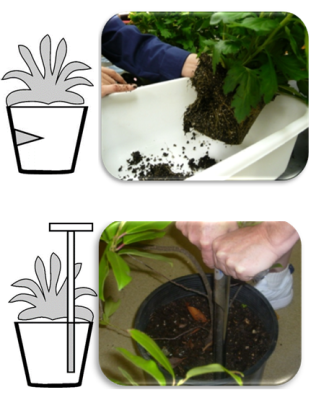
Non-destructive sampling: Collect media from 5-15 pots under the same growing/fertilization conditions
Small Pots: Remove root mass from pots and pinch a section of media from the middle section of each root mass
Large Pots: Brush aside top 1" of media and use a probe or trowel to collect the substrate from the center of several pots
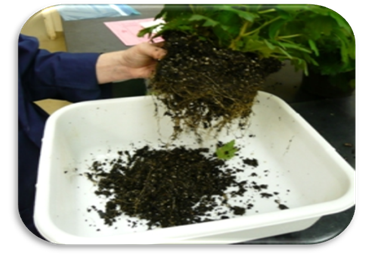
Destructive sampling: Collect media from 5-15 pots by removing the root mass and shaking pots to remove loose media.
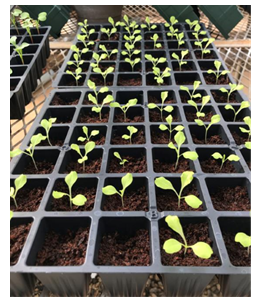
When: Post-plant soilless media testing of flats is used to diagnose seedling growth problems
How: Separately collect media from "Good" and "Bad" flats. "Good" flats resemble good germination and growth, "bad" otherwise. Collect 1-2 quarts from several cells and different flats.
This page was last modified on 06/30/2026