Cover Crops: Easy Steps to Sample Biomass for Nutrient Value
Cover crops offer a low‑cost way to reduce fertilizer inputs and improve soil fertility. Cover crops increase soil organic matter, suppress weeds, reduce erosion, and enhance nutrient retention and water-holding capacity. Legume species, such as crimson clover, hairy vetch and Austrian winter peas, also fix atmospheric nitrogen, decreasing the need for nitrogen fertilizers. Cereal species, such as barley, oats, and rye are highly effective at scavenging nutrients left over from the previous crop and keeping them in the rooting zone for the next crop.
Prior to spring termination, growers can follow these guidelines to determine the nutrient content of a cover crop and use that information to offset fertilizer inputs for the spring crop.
Step 1: Collect a Biomass Sample
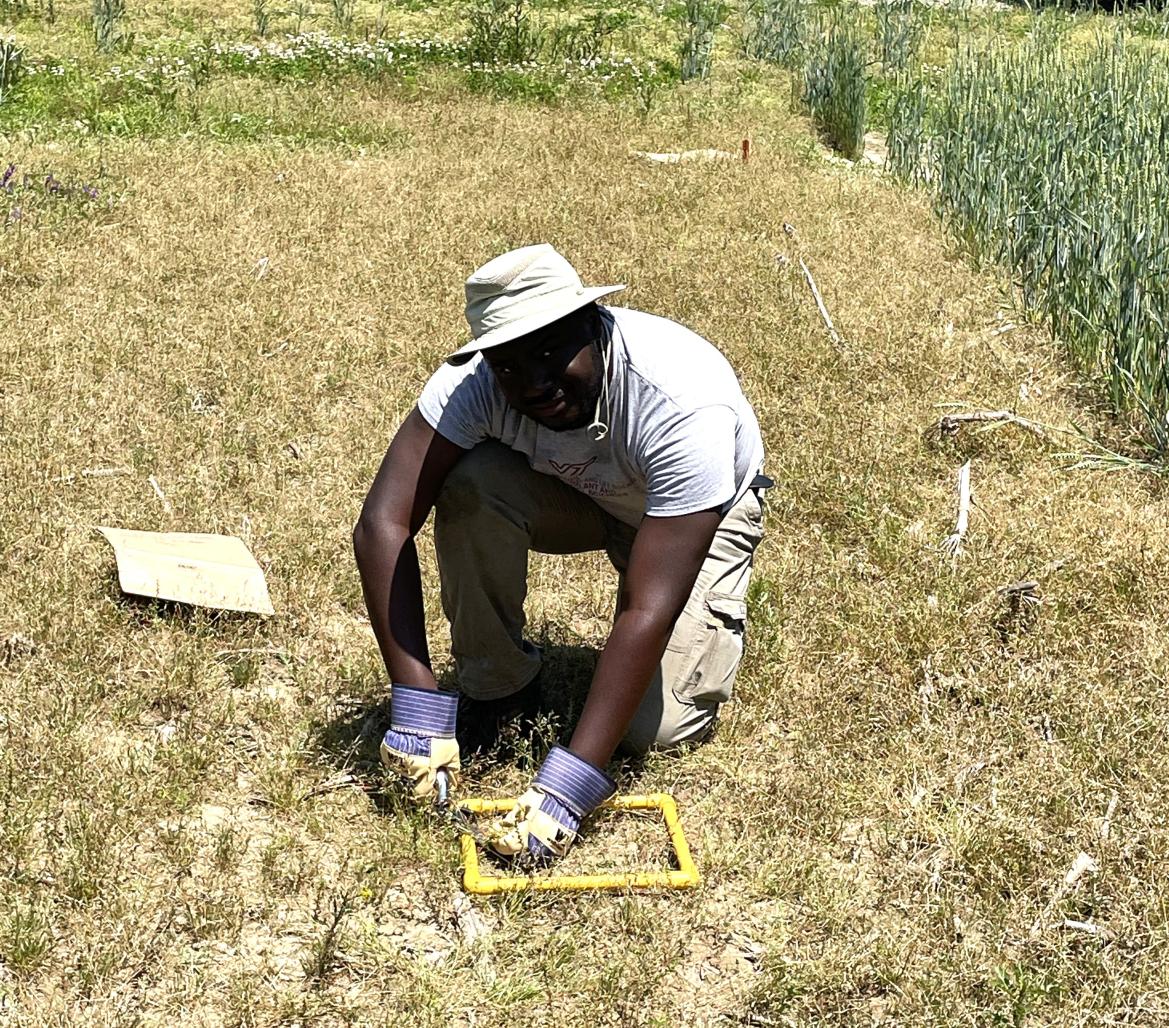
To determine aboveground biomass, collect at least four representative samples per acre.
- Cut all aboveground biomass 1 inch above the soil surface.
- Weigh the combined samples.
- Record the total fresh weight (lbs) and the total sampled area (ft²).
- Mix samples thoroughly and place a 1-gallon subsample into a paper bag for lab analysis. Do not submit more than 1 gallon and do not use plastic bags.
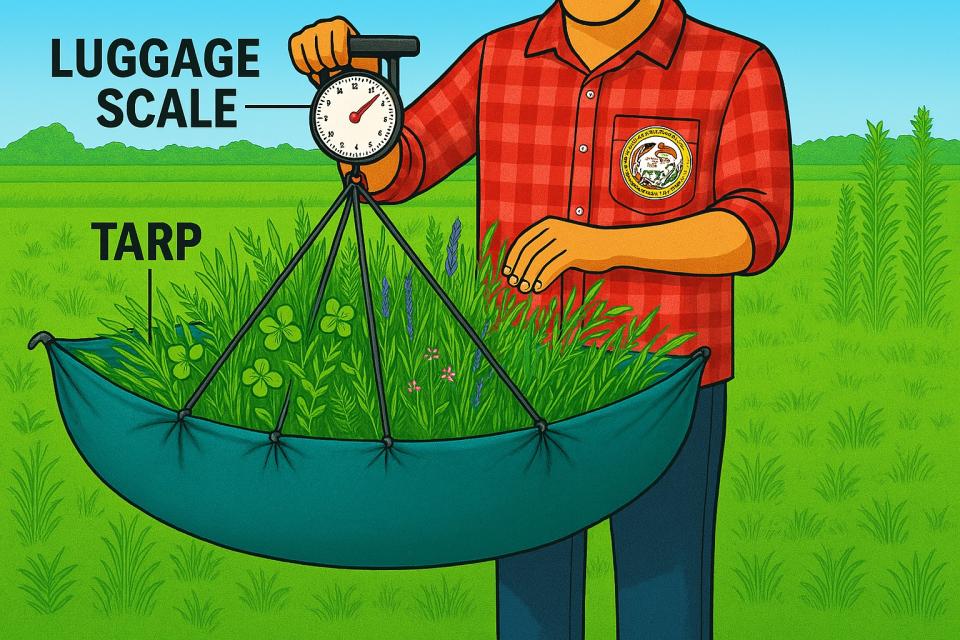
Tip: A convenient method for weighing biomass samples in the field is to use a luggage scale and tarp.
Example:
A 1 ft × 1 ft frame is used to cut 8 samples with a combined fresh weight of 5.4 lb. Total sampled area = 8 ft². Biomass density is calculated as:

Step 2: Submit Biomass Subsample to NCDA&CS Lab
- Submit a 1-gal subsample to the NCDA&CS Waste & Compost Analysis Lab using the NCDA&CS Waste/Compost Sample Submission Form and waste code NCC.
- Once you receive your nutrient analysis, identify the nutrient concentrations at the bottom of the NCDA&CS lab report. These values report the lbs of each nutrient per ton of fresh biomass.
Example:
This report shows that the biomass contains 8.61 lb N per ton of biomass.

Step 3: Calculate the Nutrient Value of the Cover Crop
To calculate nitrogen in the cover crop biomass per acre, multiply:
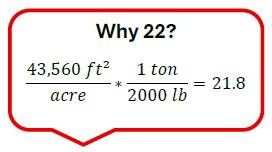
Lab N value × Biomass density × Conversion factor (22)
Example and Final Answer:

Key Points
- Ensure samples represent field variability, especially in mixed stands.
- Smaller frames require more samples; larger frames require fewer.
- Determine total cover crop fresh weight in the field before lab submission.
- Submit samples with waste code NCC.
- Send sample to the lab as soon as possible to prevent decay. Do not submit in plastic bags.
- Do not allow the subsample to dry. The lab measures fresh and dry weight of the subsample to calculate dry matter %. This value is critical in calculating the nutrients in lb/ton.
- The “Estimate of Available Nutrients” section reports total nutrients. Actual availability is variable and depends on incorporation method, crop species, and age of crop at incorporation.
- Use lb/ton values from the waste report for nutrient calculations (not mg/kg dry-weight values).
Using Different Frame Sizes and Shapes
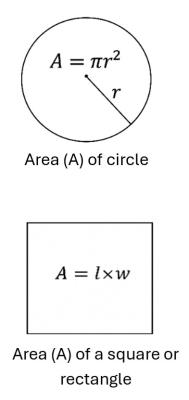
Example for a Round Frame:
Radius (r) of frame = 1.5 ft
Steps:
- Calculate r²:
r² = 1.5 × 1.5 = 2.25 - Multiply by π:
A = 3.14 × 2.25
Answer:
A = 7.07 ft²