
Agronomic Services - Nematode Management in Peach
Peach trees are susceptible to root-knot (Meloidogyne incognita and M. javanica), ring (Mesocriconema xenoplax) and lesion (Pratylenchus vulnus) nematodes (FIGURE 1). On susceptible varieties such as 'Lovell,' root-knot nematodes cause root galls and may limit tree growth (Figure 2). Soil and root assays are necessary to identify most other plant-parasitic nematodes.
North Carolina growers need to be aware of the Peach-Tree-Short-Life (PTSL) disease complex. PTSL is apparent in the spring when trees, or portions of trees, fail to grow. Trees, especially ones in their third to sixth season, may be killed back to the soil line. This problem most often occurs where trees are replanted in recent peach-tree sites.
Several factors contribute to PTSL. Direct factors include freeze injury as well as certain fungal and bacterial pathogens. Indirect factors may include plant-parasitic nematodes, rootstock selection and poor pruning and soil management practices.
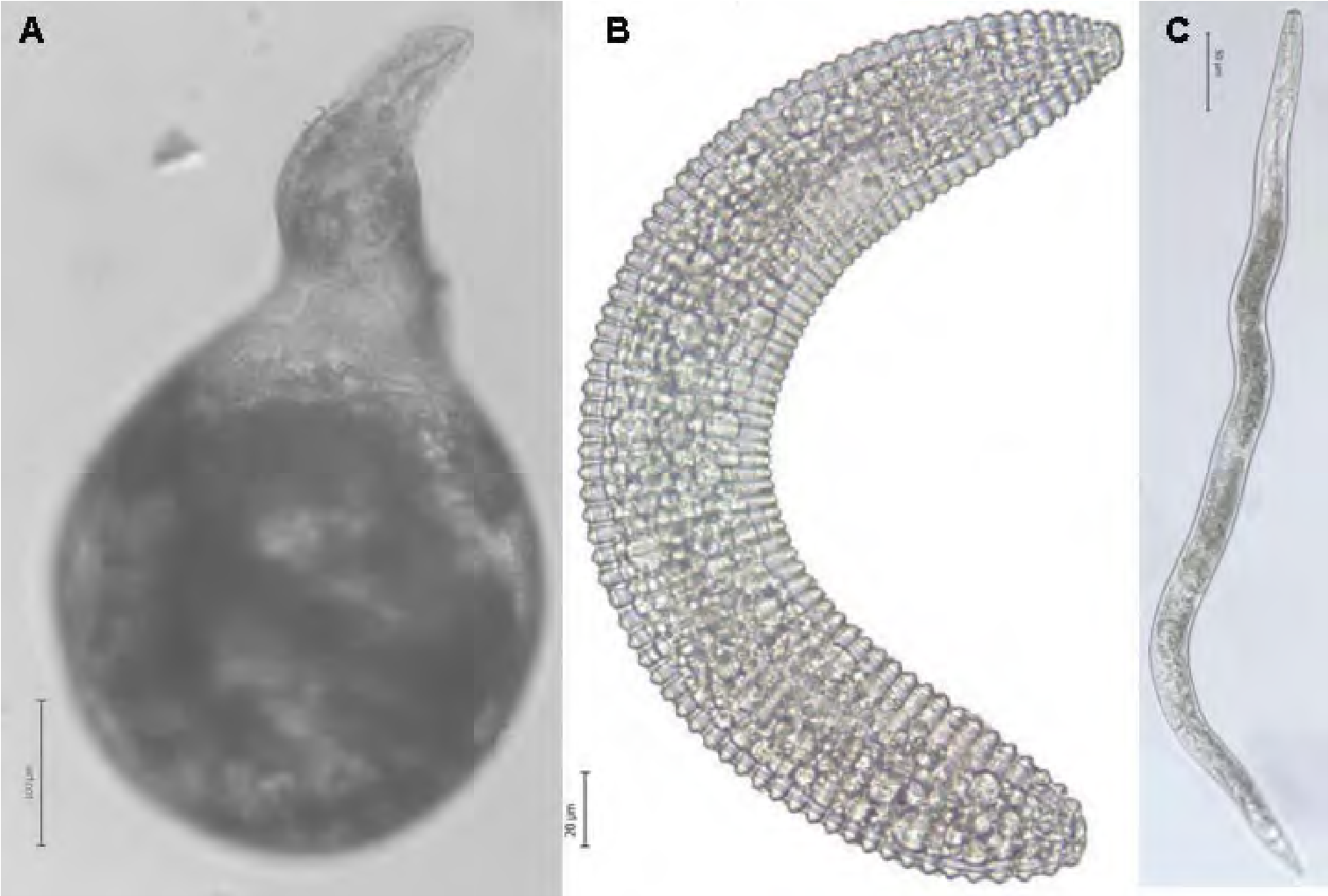
Micrographs of nematodes from peach: A. Root-knot (Meloidogyne sp.); B. Ring (Mesocriconema sp.); C. Lesion (Pratylenchus vulnus).
Although nematodes rarely kill trees, they can predispose them to PTSL, especially ring nematodes. Cultivars tolerant to PTSL include 'Guardian' (root-knot resistant), 'Lovell' (root-knot susceptible) and 'Halford.' The root-knot resistant cultivar 'Nemaguard' (FIGURE 2) is very susceptible to PTSL.
The root-knot resistant cultivar 'Guardian' is a good choice for management of M. incognita, M. javanica and PTSL, but pretreatment of infested fields with a nematicide is needed to control other nematodes and limit PTSL. Non-fumigant postplant nematicide treatments are available, but their efficacy may be limited. Follow the link to the NC State Extension publication below to find guidelines for pretransplant fumigant treatments. Long-term cropping systems should also be considered in peach tree establishment and PTSL management. Successful strategies may include use of cover crops, such as wheat.
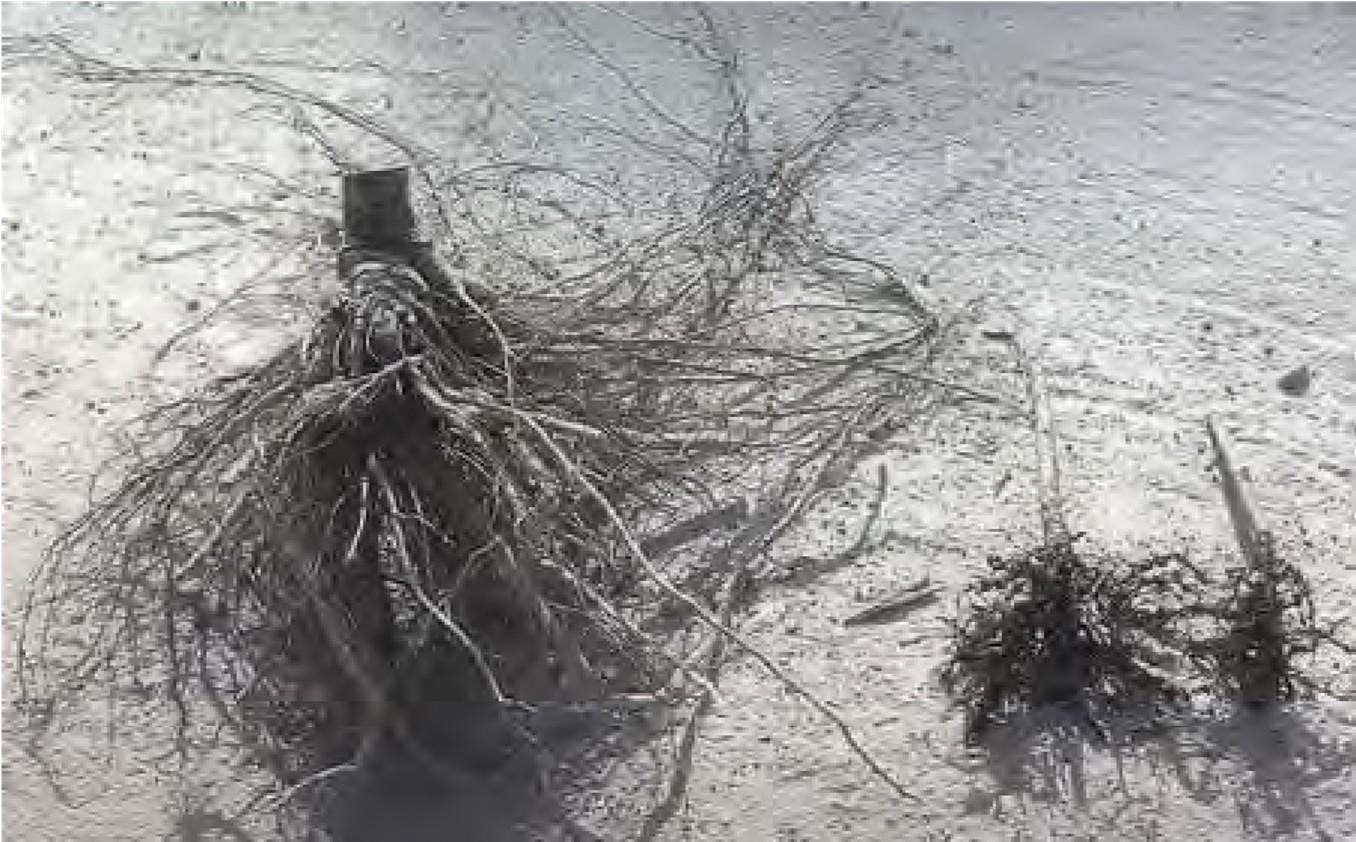
Figure 2. Root growth of two peach cultivars: Nemaguard (left) is root-knot resistant but PTSL susceptible; Lovell (right) is root-knot susceptible
(photo provided by Dr. Ken Barker).
For more information, see: